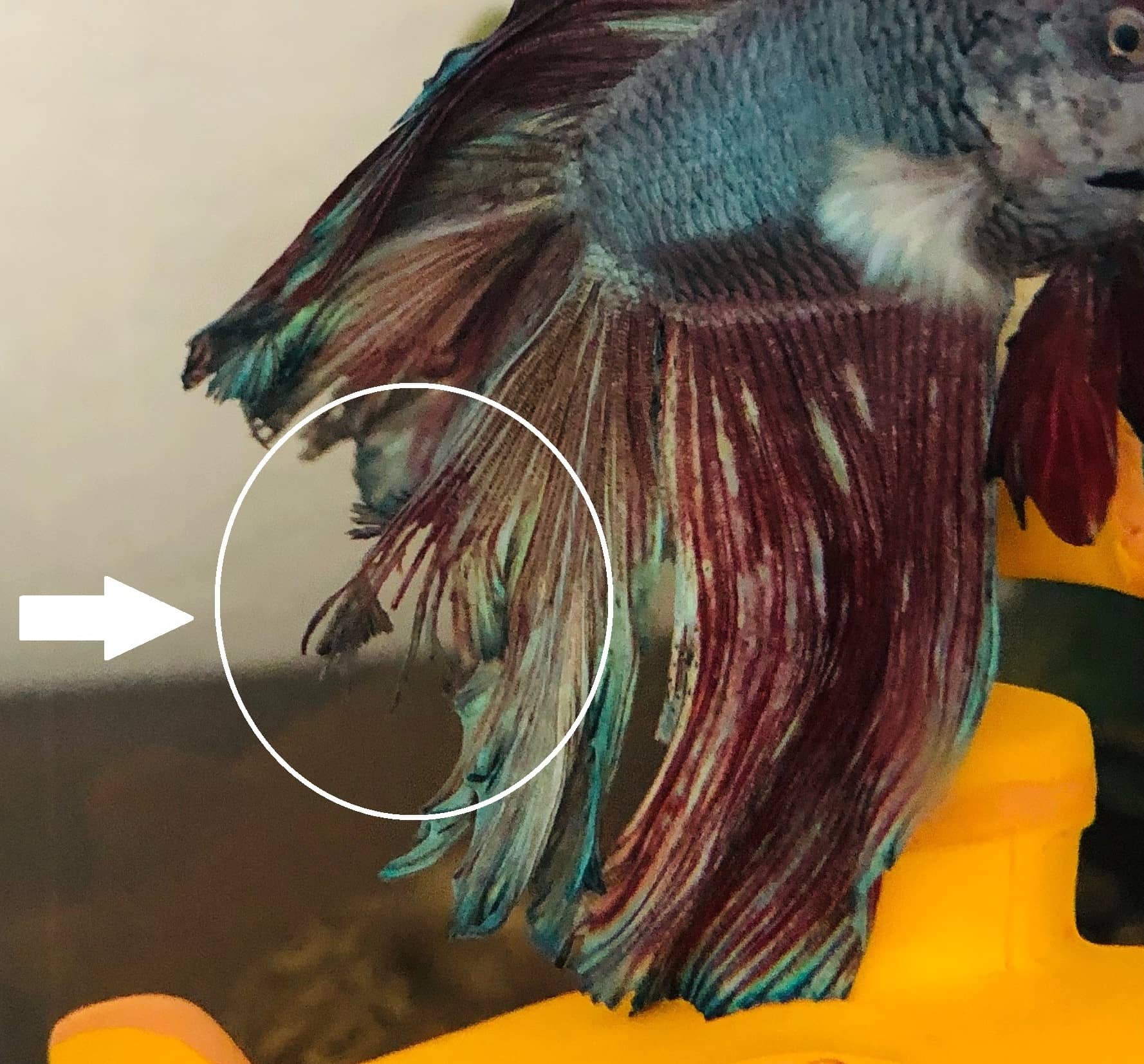
Early Stage Betta Fin Rot Vs Fin Loss. Change 50% of the water from your tank and replace it with conditioned tap water. Once all these parameters have been met, you should do a 50% water change.
Betta Fin Rot vs Fin Loss vs fin melt comparison from lifeoffish.com Observing a Betta
The betta is also known by the name of Siamese fighting fish. It is native to Southeast Asia, including Cambodia, Laos, Myanmar, Thailand and Vietnam. It is a tropical fish and prefers a freshwater aquarium with a high-quality gravel substrate. It is well-known for it's bright colors and is an excellent pet to get started.
Being observant of a betta
By watching a Betta, to comprehend the reasons behind its behaviour. Bettas are naturally interested in the world around them. Any sudden change can attract their attention. They also have a habit of looking. They are prone to stare at any movement that may be the food source or predator.
It is possible to observe an betta when you place it within a aquarium with another betta. Keep both lighting and temperature identical. If possible, try to be with the fish for 30-60 minutes every day. A classical playlist can assist. When observing a betta, you must look for the signs that the fish are happy and healthy.
A healthy fish will swim about the tank daily basis, interacting with the surrounding. It may be a lazy swimmer or move quickly from one side to another. However an unhealthy betta can sit at the bottom the tank, and not show sign of joy.
Betta's behavior is determined by the level of stress they experience. When the fish is aware of a threat, they might respond up in anger. This is their way of removing the threat. They may flare at other creatures , or even at their reflection. Even though this can be stressful to your betta's health, small instances that flare up can be controlled.
In the wild, I was able to see a wild beta
Watching a wild betta in the wild can be fascinating. These fish are extremely curious and tend to look around their surroundings. Although they're simple to handle yet you might be amazed at some of their more curious behaviours. Here are some signs you may notice when you spot one in its natural habitat:
Bettas are predators and are often prey for creatures, which makes them exceptionally attentive to all movements around them. This means that they're always alert but can stay still as they watch. While you're looking at the species, keep an ear out for any aggression which you spot.
If you'd like to view the wild betta, then you'll need to understand their environment. Bettas reside in highly organized habitatsand don't require much space. They usually spend their time hunkering down under vegetation. Their fins have a small size, that makes them difficult to discern. Additionally, their muddy brown hue makes them difficult to distinguish.
Another sign of aging bettas is lethargy. Bettas who are young should be energetic, however if they look tired, they could be suffering from an illness. Additionally, they might not be as enthusiastic about food as they used to be. Also, you may notice an increase in their wiggle dances.
The observation of a captive betta
Be able to observe a betta at a distance is an excellent way to educate students about the biology of bettas. Bettas are tropical species that prefer water temperatures of 72 to 82 degrees Fahrenheit. They have trouble with cold water due to it making them tired and weakens the immune system. It is also a stressor to change the water frequently, which stresses them out. Their name comes directly from the Malay term "betah," which means "fighter," referring to their ability to endure in uninhabitable water.
You can observe a beta's behavior from an aquarium for a better understanding of what makes it do better at swimming or behave in the same way. It is also possible to examine the reactions of bettas to various environmental conditions, including changing temperatures or rocks. You can also instruct your students to conduct experiments of their own. They can formulate predictions about how the fish will behave in various situations.
Another good way to find out about bettas is to observe their feeding habits. Bettas prefer floating pellets over fish flakes. They also require to come up to the surface when they need to recharge their labyrinth, as they don't like tanks that have a shallow bottom.
Bettas are usually housed in smaller aquariums. However, there are certain points to remember when you care for one. Bettas are extremely susceptible to several common freshwater fish diseases. They are susceptible to ich, also known as White Spot Disease, caused by the Ichthyophthirius multifiliis parasite, which occurs in numerous freshwater fish tanks. When this parasite strikes the fish, it creates white spots on its body which could be noticeable. Fish may also clamp his fins or be hung slack at the surface of the water.
Feeding a betta
Bettas need access to the water to breathe. The organ called a labyrinth on the body of a Betta allows it breathe oxygen into the air. This means that you don't have to purchase an air-pump in order to keep your betta satisfied and healthy. They also require enough space for swimming and hiding. The bigger the tank, the better.
Bettas will consume as much as three pellets each time they take a bite, so you'll need be sure to prepare enough food. It's also important to soak food items that are dry prior to. Fooding your beta in the right amount is vital to its health and well-being.
In fact, feeding your betta too much can cause digestive problems. If your betta's eats way too often, they'll be constipated, which can lead to various health issues. Your betta can also appear sleepy and spend the majority the time in a semi-sleepy state. This could mean your betta may be suffering from SBD or has been overfeeding.
When choosing the food to treat your baby betta to, be sure that you select a diet that is high in nutrients and is free or harmful bacteria. Bloodworms and brine shrimp are common in ponds and pools , and make a great ingredient to add to the diet of your betta.
Believing in a betta
Becoming a observer of a betta tank is an exciting experience. You can learn about it's behavior and learn what it does to respond to various stimulus. It is also possible to sketch the outline of a betta and write about its characteristics, dimensions, and color. You can also compare the characteristics of a male and female betta , and examine the way they feed. In addition, you can find out how different kinds of food can affect the behavior of bettas.
Bettas are not found in large pools. They prefer small, enclosed spaces. Their habitat is a shallow body of the water that is filled with vegetation. They spend the majority of their time within the foliage. That means they're in constant contact with the detritus of leaves.
Bettas are native to watery, shallow habitats located in Southeast Asia. This means they are used to living in small volumes of water that is low in oxygen. Bettas have evolved to survive in these conditions through the development of a special organ, called Labyrinth that allows them to breathe through the skin. Their diet includes insects and their larvae.
Bettas can be peaceful, but they might also fight with other fish. If you don't want to disturb the tranquility of your male betta and peace, you must put them in an individual tank. A male Betta can be a threat to another male in the vicinity.
Believing in a betta in wild
Monitoring a betta's natural habitat is a wonderful way to learn about how it conducts itself in the wild. Bettas are territorial creatures. They fight to establish their territories. If female or male, Bettas tend to ram or swim into other fish. They can also bite the fins on other fish. For their own safety they require a cozy hiding place. A cave with an aquatic theme or a tree-lined corner may be a excellent spot for them.
You can look at the behaviour of a betta fish to learn how relaxed or anxious it is. If it's upset, the fish will spit out, flake its fins, and react differently to the presence of you. If the fish seems unhappy and bored, the fish may even be aggressive.
The betta is an ornamental fish that is popular throughout the world. The large fins of the betta will draw attention. The species' natural aggression makes them often referred to as "fighting fish." Being aware of their behavior will help you determine their overall health condition and the mental state of any fish you see fed.
The most important thing that you need to remember when looking at a betta the wild is watching the species closely. Bettas come in different colors they are found in, with the most popular being blue, yellow, black as well as albino. Male bettas are generally brighter than the female. Fins can vary in size, and males tend to have longer fins than females. They can also sport a distinct tail that can decay.
Next step is to clean everything. It is caused by a bacteria called finobacterium longum, which is found in the intestines of many fish species. The fins will appear ragged, and the tips or other parts of.
It Is A Very Common Occurrence In Betta Fish’s.
One is an injury caused by one factor or. Betta fish are awfully sensitive to improper water conditions. The complete loss of fins or the tissues in between fins’ rays.
Fin Rot Is A Bacterial Condition That Steadily Eats Away At The Fins Of Your Betta.
Poor water parameters are also one of. It is caused by a bacteria called finobacterium longum, which is found in the intestines of many fish species. The root of the fin nearest to the body will be swelling, bleeding, or blackish brown.
Betta Fin Rot Vs Fin Loss.
These microscopic organisms adhere to the fins of your fish and eat them. The biggest significance difference between fin loss and fin rot? Fin rot will spread down to the body if left untreated, and the body will begin to rot.
If Diagnosed At An Early Stage, Betta Fin.
The new fin tissue is often clear like saran wrap when it begins to grow. September 2, 2021 by jessica griffin. Fin rot on betta fish fin loss on betta signs of fin rot.
Fin Rot Is A Bacterial Infection That Affects The Fins Of Fish.
The edges of the fins will discolor in the early stages of fin rot, appearing milky at the fin edges. Betta fin rot is pretty easy to see if you check up on your fish regularly. Some bettas naturally have fins that look that way, so it's possible that it's just a healthy fin.
Share
Post a Comment
for "Early Stage Betta Fin Rot Vs Fin Loss"

Post a Comment for "Early Stage Betta Fin Rot Vs Fin Loss"