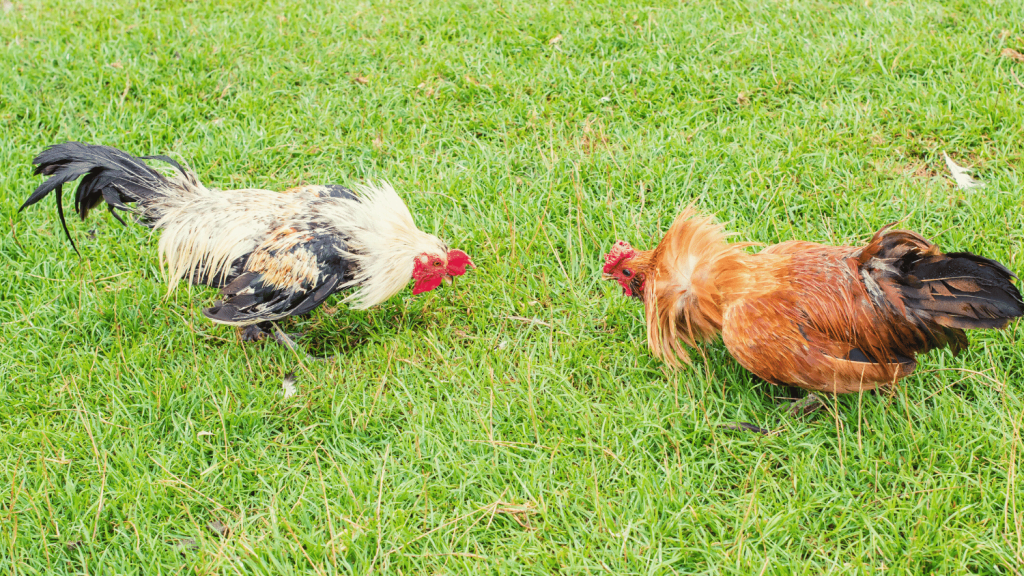
How To Make A Rooster Fight Better. These types of events are. Roostersfightclub.io is an upcoming play to earn auto battler where you can train, improve, fight and breed roosters against other players!
How To Make A Rooster Fight Better? The Poultry Feed from thepoultryfeed.com Observing a Betta
The betta is also referred to also as the Siamese combat fish. They are natives of Southeast Asia, including Cambodia, Laos, Myanmar, Thailand, and Vietnam. It is a tropical fish and prefers the freshwater aquarium with a premium gravel substrate. It is recognized for its vibrant colors . It's a great pet for beginners.
Looking at a betta
Be watching a betta can help you understand its behaviour. Bettas are naturally fascinated by the world that surrounds them. Any sudden change or change will grab their attention. They also have the habit of watching. They will look at any movement that may be hungry or even a predator.
It is possible to observe the betta by placing it in a tank along with another betta. Make sure that you keep the temperature and the lighting similar. If possible, observe the fish for 30-60 minutes each day. A classical playlist can help. While observing a Betta, you should look for patterns of behavior that suggest the fish is content and healthy.
A healthy betta can swim about the tank regular on a regular basis, making contact with its surroundings. It might be a lazy swimmer or go from one side to the other. On the other hand an unhealthy betta might stay at the bottom of the tank and show no indicators of happiness.
Betta's behavior is determined by the kind the stress it goes through. When a fish senses threat, they may respond and fight. This is their method to get rid of the threat. They may flail at different species or at their reflection. However, while this is stressful for your betta's health, brief episodes that flare up can be controlled.
Observing a wild betta
A visit to a wild betta may be fascinating. These fish are extremely attracted by their surroundings and they are keen to learn more about their surroundings. While they're relatively simple to handle but you might be surprised at their more strange behaviours. Here are a few signs you may notice as you look at one in its natural environment:
Bettas are predators, and are frequently prey of other creatures, which makes them keenly aware of any movement in the area. This is why they are extremely alert, and can remain in a solitary position while watching. When you're observing the aquarium, keep an eye out for any aggressive behavior that you see.
If you're planning to see a wild betta, it's best to understand their environment. Bettas reside in highly organized ecosystems, so they do not require a lot of space. They are most likely to spend their time hunkering down under vegetation. Their fins are small, which makes them difficult to see. Furthermore, their muggy brown hue makes them difficult to distinguish.
Another symptom that is common among aging Bettas is a lack of energy. Young bettas should be active, but if they seem drained, they might be suffering from illness. Furthermore, they might not be as enthusiastic about food as they once were. You will also notice that they are less animated in their dances.
Inquiring about a captive beta
Watching a betta in captivity is an excellent method of teaching students about the biology of betta frogs. Bettas are tropical fish that favor water that is 72 to eighty degrees Fahrenheit. They have trouble with colder water since it makes the fish lathyrgic and weakens their immune system. Constant water changes also stress them out. Their name is derived directly from the Malay phrase "betah," which means "fighter," referring to their ability to endure in uninhabitable water.
You can observe a beta's behavior within an aquarium to discover what makes it swim better or behave certain ways. It is also possible for you to study the reactions of bettas to various environmental factors, like temperatures or rocks. You could also ask for your pupils to perform their own experiments. They can formulate predictions about how the fish will respond in different scenarios.
Another excellent way to gain knowledge about bettas is to observe their feeding habits. Bettas prefer floating pellets over fish flakes. They also require to come up to the surface to replenish their labyrinth, and they do not like an aquarium that has a sunk bottom.
Bettas are usually housed in a small aquarium, but there are certain things to remember when caring for one. Bettas are very susceptible to several common freshwater fish diseases. Some of them are ich. White Spot Disease, caused by the Ichthyophthirius multifiliis parasite. This parasite is present in many freshwater fish tanks. When this parasite is infected on fish, it creates white spots on its body and they can be easily visible. It can also cause the fish to clamp its fins or float at the surface of the water.
Feeding a better
Bettas need access to the surface of the water in order to breathe. A labyrinth gland on the body of a Betta allows it the draw of oxygen through air. That means you don't need to buy an air pump in order to keep your betta satisfied and healthy. They also need room to be able to hide in and swim. The bigger the tank, the better.
Bettas are able to consume up to 3 pellets per meal. are hungry, so you'll want take care to prepare enough food. It's also important to prepare dry food items prior to. Giving your betta the proper quantity is crucial for its health and well-being.
Doing too much to your betta can cause digestive problems. If your betta's food intake is too often, they'll be constipated which can lead to several health problems. It is also possible that your betta appears exhausted and spend most of the day in a sleepy state. It could be that your betta suffers from SBD or is overfeeding.
When choosing the kind of food you nourish your fish, be sure that you select a diet that is high in nutrients and free contaminants. Bloodworms and brine shrimp are common in ponds or swimming pools. They are a good food source for your betta.
Observing a betta in captivity
A betta's observation in its tank can be an interesting experience. You can learn about the behavior of the animal and the way it responds to stimulus. You can also sketch the outline of a betta and provide details about its features measurement, and color. It is possible to contrast a male and female betta by observing the way they feed. Additionally, you can study how different kinds foods affect the behavior and behavior of bettas.
Bettas don't live in large pools. They are more at home in smaller, enclosed spaces. Their habitat is a shallow body waters that is rich in vegetation. They spend the majority of their lives hiding in the forest. This means they are in constant contact with detritus and leaves.
Bettas are native to watery, shallow habitats within Southeast Asia. These animals are adapted to being in small quantities of low oxygen water. Bettas have evolved to survive in these conditions by forming an organ special to them, known as the labyrinth. This organ allows them to breathe straight from their surface. Their diet is based around insects and their larvae.
Bettas can be tranquil, but they may sometimes fight with other fish. If you do not want to disturb your male betta's peaceful life, it is better to place it in an individual tank. A male Betta is more likely to attack a male that is in close proximity.
Watching a betta move in the wild
Observing a betta in its natural habitat is a great opportunity to observe how it conducts itself in the wild. Bettas are territorial animals. They fight to establish their territories. Female or male, Bettas often ram or toss other fish. They may also bite the fins and fins from other fish. To stay safe they require a cozy location to hide. A cave that is affixed to the water or a planted area can be a excellent spot for them.
It is possible to watch a betta's behaviour to determine how content or anxious it is. When it's stressed it might spit or flake its fins, and react differently at your presence. If the fish is unhappy ou, it may even turn aggressive.
Betta is an ornamental species of fish that is popular around the world. The large fins are sure to draw the attention of anyone who sees it. The Fish's natural aggression is what makes them known as "fighting fish." By observing their behavior, you assess their overall health , as well as the state of mind of the fish as it is fed.
The most important thing to remember when watching a betta out in the wild is that you observe the species carefully. Bettas are available in a variety of colors as well as the most popular being blue, yellow, black, clear, and albino. The male Betta is generally more bright than female. Their fins may vary in length. Males typically have longer fins than females. They also may have the distinct tail, which can become rotten.
The following are some things you can do to deal with an aggressive rooster. How many ticks does a possum eat in a day 8913 8921. This is what they do.
So Step 1, When The Sanctuary Gets A.
These types of events are. We do our best to keep things. However, this does not impact our reviews and comparisons.
Then Do The Same With The Other.
During conditioning, let the rooster hit the catch cock as many times to the limit of its endurance 2 to 3 times each week at the beginning of training at the training at knee level of the handler. The hatch twist is a. Wpit18.com is an online platform where live shows of rooster fights are held regularly and people put bets on their favorite rooster just like in horse racing.
Safely Separate The Aggressive Rooster In His Own Cage.
Keep in mind that we may receive commissions when you click our links and make purchases. Protect yourself as you deal with your rooster by wearing the right clothes. Roostersfightclub.io is an upcoming play to earn auto battler where you can train, improve, fight and breed roosters against other players!
The Bantam Has A Big Attitude And Is Not Afraid To Take On Any Opponent, Making It One Of The Most Dangerous Fighting Rooster Breeds.
Severe neurologic syndrome associated with middle. Decisions were made by the rooster. Also, it is important to consider using only a silver line to a silver line as if the ultimate goal is a silver type bird;
Don’t Go For Too Much Of A High.
This is what they do. The following are some things you can do to deal with an aggressive rooster. Don’t go for too much speed, they are usually not accurate cutters.
Share
Post a Comment
for "How To Make A Rooster Fight Better"

Post a Comment for "How To Make A Rooster Fight Better"